
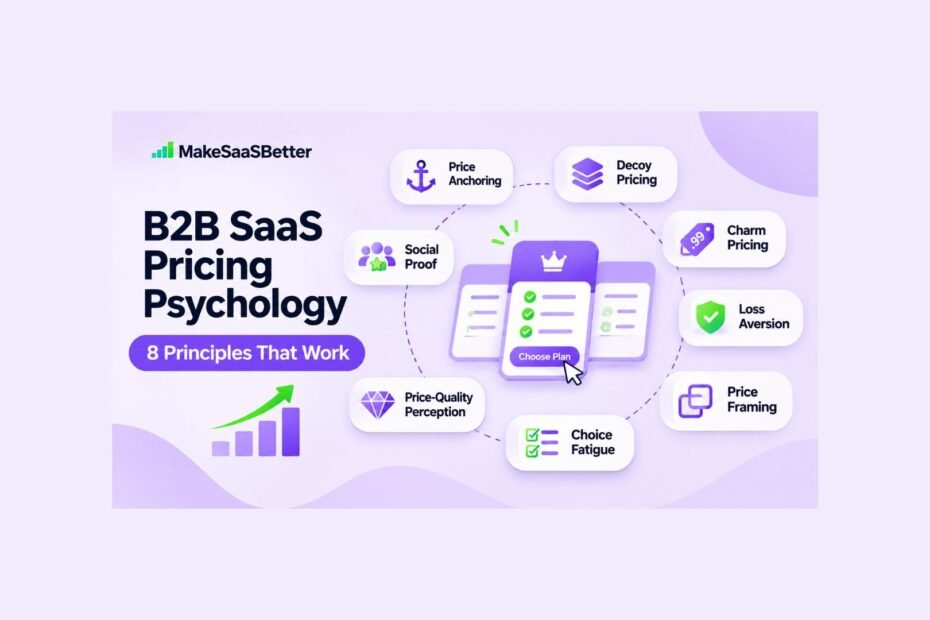
TL;DR
- B2B SaaS pricing psychology influences how buyers perceive value, compare plans, and make purchasing decisions.
- Price anchoring, decoy effects, and charm pricing can shape pricing perceptions.
- Loss aversion and price framing influence how buyers assess costs and risks.
- Social proof and clear pricing choices build buyer confidence.
- Test psychological pricing strategies to understand what works for your audience.
How you price your SaaS product will affect how much people feel it’s worth paying for.
According to G2’s 2026 Buyer Behavior Report, 49% of B2B software buyers reported that their CFO had reversed an already-approved purchase in the previous 12 months.
Pricing psychology can play a huge role in how B2B SaaS customers make decisions based on factors such as price anchoring, perceived value, and loss aversion.
By understanding pricing psychology, SaaS companies can provide clarity around their pricing, reduce uncertainty around purchases, and communicate value without resorting to aggressive discounting.
What Is B2B SaaS Pricing Psychology?
Pricing psychology in B2B SaaS refers to studying how buyers’ psychology impacts how they perceive, judge, and react to pricing.
Rather than looking only at the price of your software, it considers how you present your pricing, how you compare it with other options, and what buyers expect to pay.
For example, if you charge $199 per month for your plan, but there are other plans available at $399 that include extra features, it may make your plan look more reasonable.
In B2B SaaS, pricing decisions involve budgets, multiple people, and return on investment. This means understanding how buyers make decisions will help your company show the value of your product and make it easier for them to understand your pricing.
Why Pricing Psychology Matters in B2B SaaS
B2B buyers will look at whether the software offers them enough value, fits within their budgets, and reduces risk.
Understanding how buyers think can help you get to grips with what influences their decisions.
According to a 2026 B2B buyer study by Arcade, 48% of buyers said that feeling understood by a vendor was important in helping to build trust.
Using pricing psychology can help SaaS businesses:
- Have a clear pricing strategy.
- Focus on value rather than discounts.
- Reduce confusion.
- Boost confidence among multiple decision-makers.
If your pricing strategy fits well with what your buyers expect, they’ll be able to understand more easily whether it is a good investment.
8 Psychological Principles That Influence SaaS Buyers
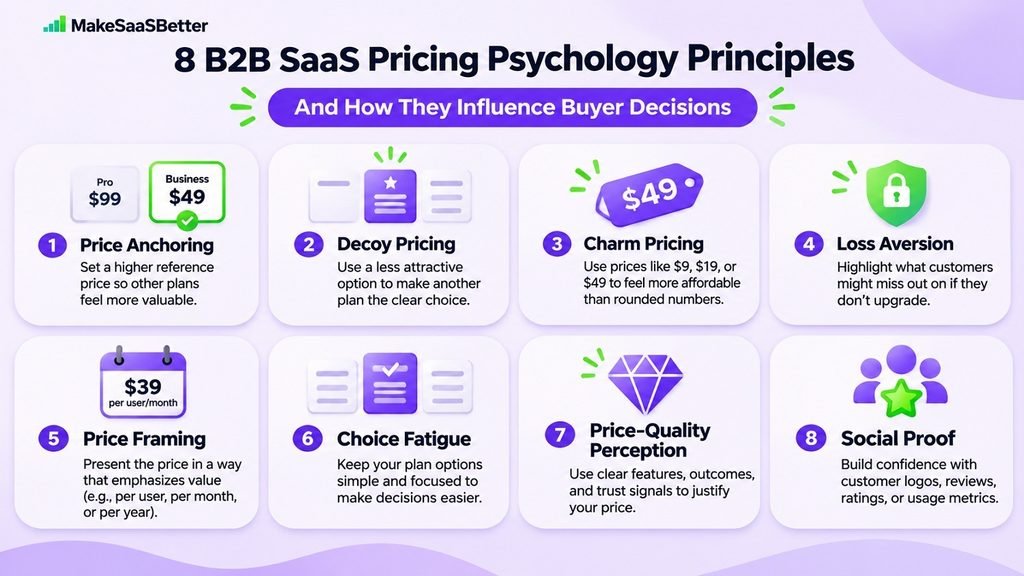
Understanding how buyers perceive your pricing strategy can help you present your value proposition to your audience. Below, we’ve listed eight psychological principles that can impact the purchasing decisions made by your audience.
1. Price Anchoring – Pipedrive
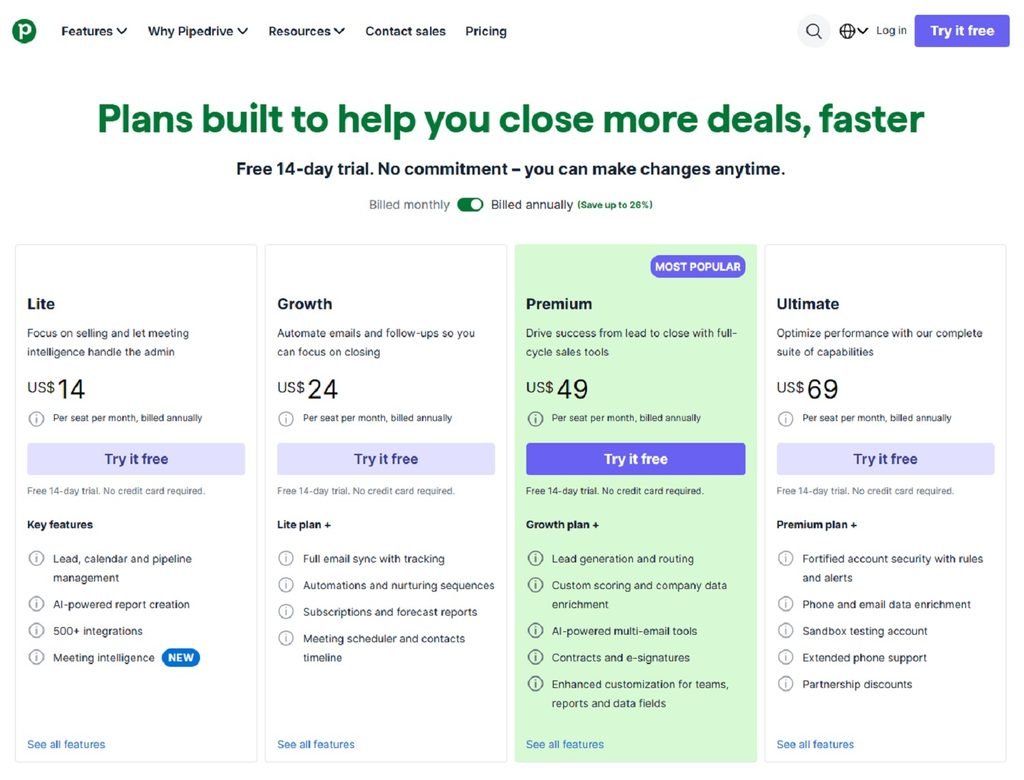
Price anchoring in SaaS occurs when buyers use a starting price as a reference point.
Pipedrive’s pricing page shows four different plans: Lite, Growth, Premium, and Ultimate. This allows buyers to compare lower-priced options with higher-priced options.
For example, someone might see Premium as better value when comparing it with Ultimate.
Whilst this won’t necessarily make a plan look more appealing, it does help provide context.
Tip: Show pricing in a logical order and make sure you’re showing the extra value of each plan.
2. Decoy Pricing – Wix
Decoy pricing in SaaS occurs when you introduce a less appealing option to make another option look more attractive.
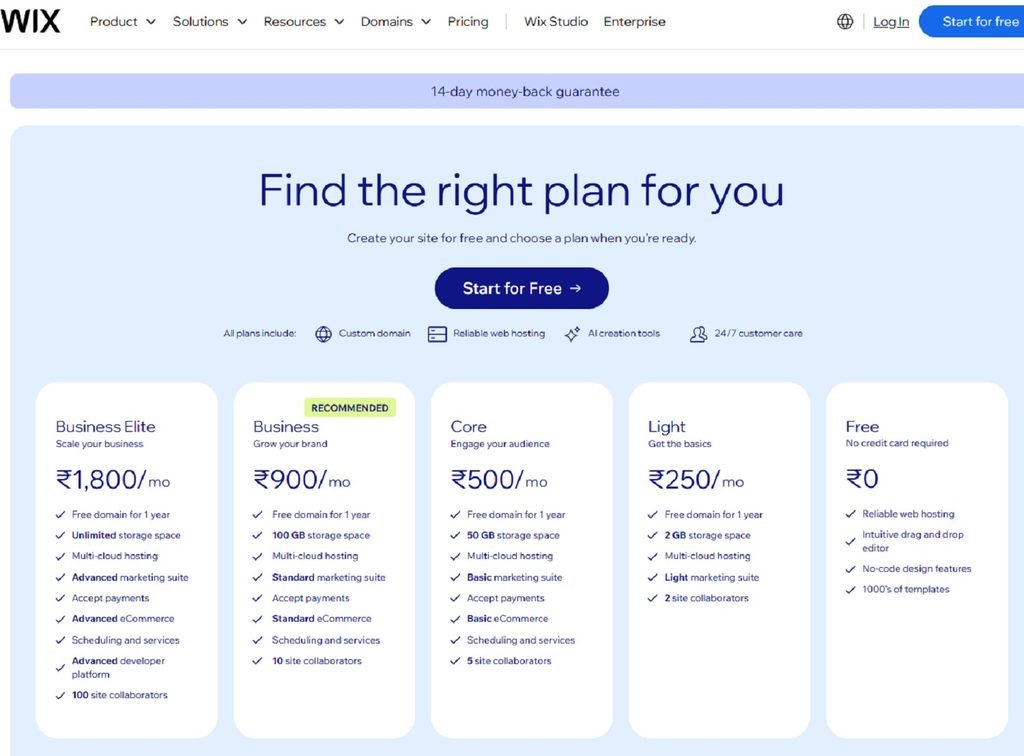
Wix’s pricing page offers Light, Core, Business, and Business Elite plans. Its Business plan is highlighted as the recommended option.
Core and Business provide a useful example of how buyers might compare closely priced plans with different features.
Business includes additional storage, more site collaborators, and advanced eCommerce capabilities compared with Core.
For someone who needs these features, the extra cost may make Business look like better value.
However, this is an example of comparative pricing rather than a confirmed decoy effect. A true decoy would be an option that makes another plan more attractive without offering equally compelling value on its own.
Tip: Make sure there are meaningful differences between your packages. Show buyers why paying more could be worthwhile without creating misleading options.
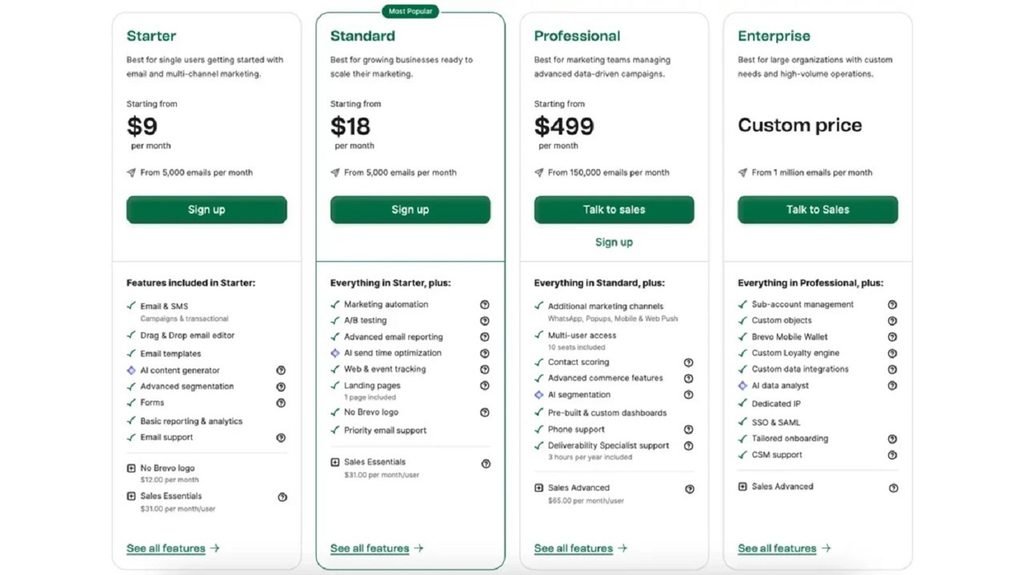
3. Charm Pricing – Brevo
Charm pricing in SaaS is when you set prices just below whole numbers. For example, $9 versus $10.
Brevo has a Starter plan beginning at $9 per month.
For some people, this will look like a much cheaper price. However, B2B customers will want to know what the full cost is, how much they can use, and what their commitments are.
If the pricing looks cheap but there are hidden costs or not enough features, it won’t appeal to them.
Charm pricing may be more applicable to self-service subscriptions than enterprise purchases.
Tip: Try using charm pricing with your audience to see if it helps improve conversions.
4. Loss Aversion – Loom
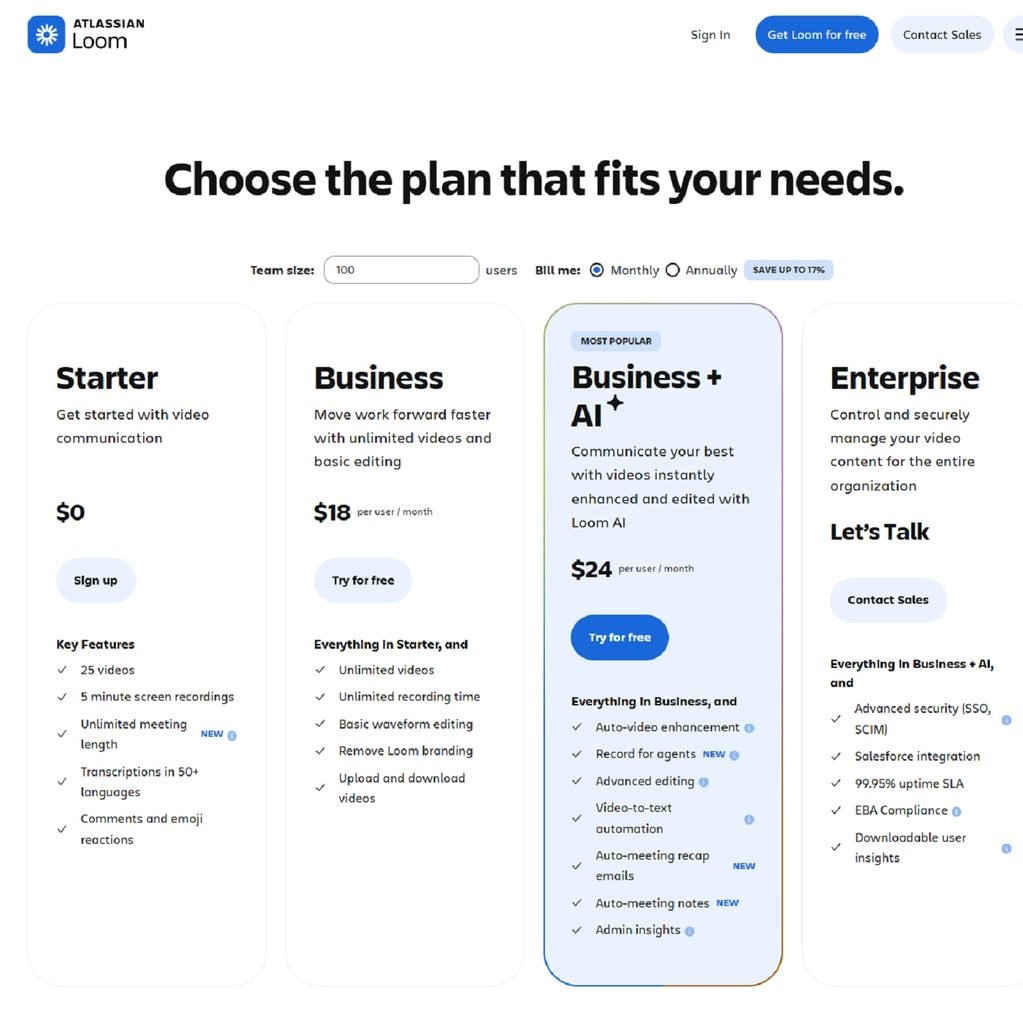
Loss aversion in SaaS pricing occurs when customers give more weight to losing something valuable than gaining something of similar value.
Loom has free and paid versions. This allows people to try out the product before upgrading.
As people get used to using video messaging within their teams, the extra features may look more valuable.
This principle really comes into play when people start to think about losing access to features they rely on.
However, simply having restrictions on the free plan isn’t an example of loss aversion.
Tip: Let your customers actually see the value in your product. Then explain how the paid features can help them with their current processes.
5. Price Framing – Descript
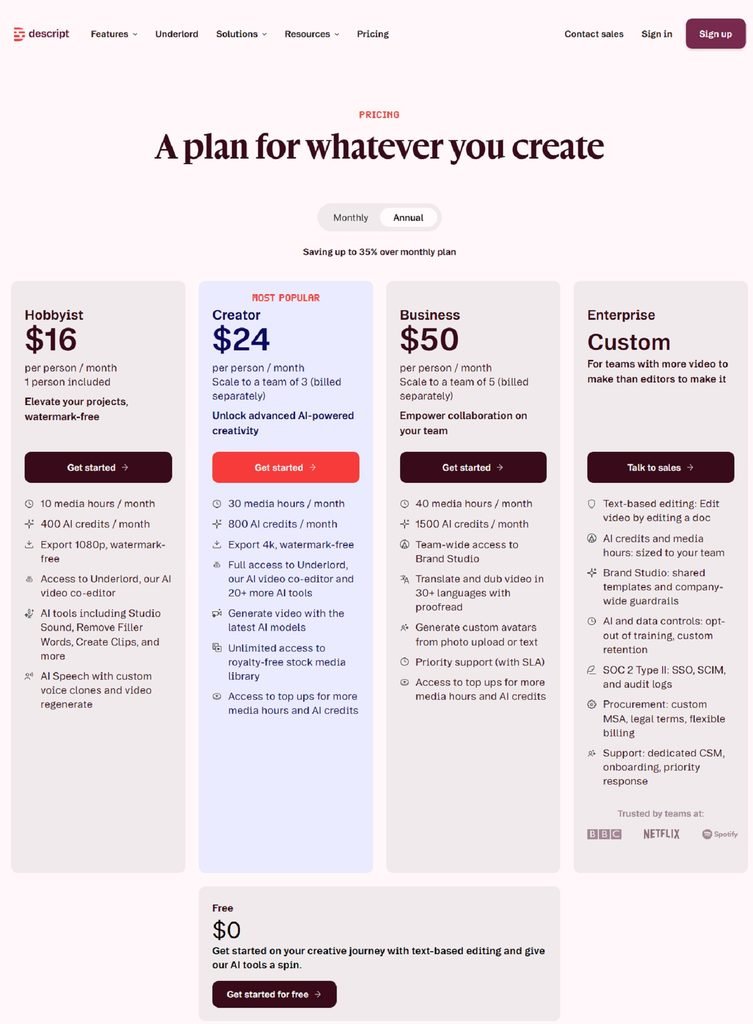
Price framing in SaaS is when you present pricing in a certain way. Whilst the cost may be the same, it can impact your customers’ purchasing decisions.
Descript has a pricing page that allows buyers to see the difference between paying monthly or annually. This means annual plans are shown with a cheaper monthly equivalent, making it easier to see how much you could save.
This can help B2B customers see the difference between flexibility and commitment. However, you should be clear about how much they would be paying in total and when.
Tip: Make sure you include both monthly and annual pricing. Then be clear about how much they’ll save.
6. Choice Fatigue – Webflow
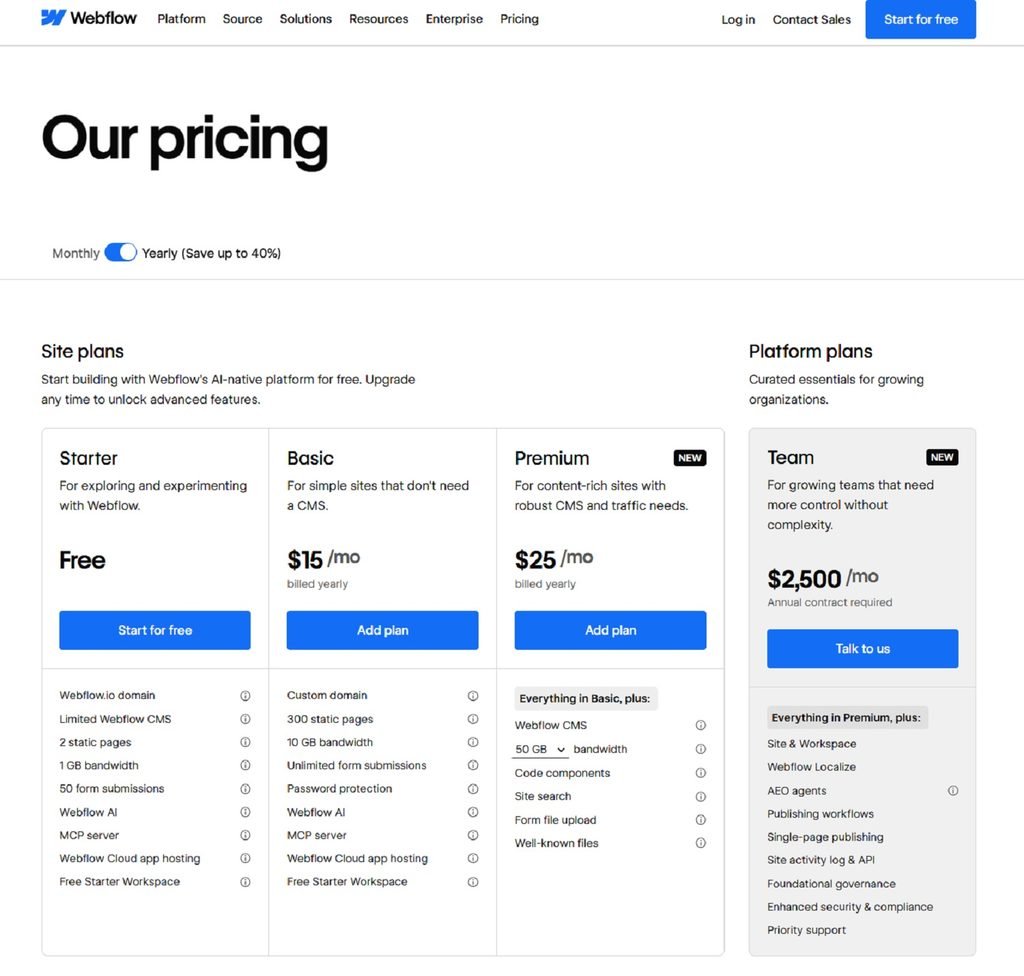
Choice fatigue in SaaS pricing occurs when there are too many options or it becomes confusing to compare them.
Webflow has separated Site plans from Workspace plans. This helps customers understand what they need for their website and what they need for their team.
This shows how you can group options to help with complex pricing.
Customers can focus on the ones that fit their needs.
You can see more examples of how SaaS companies organise their pricing information in our B2B SaaS pricing page examples guide.
Tip: Group the plans together based on what your customers need. Focus on the differences that will impact their purchasing decisions.
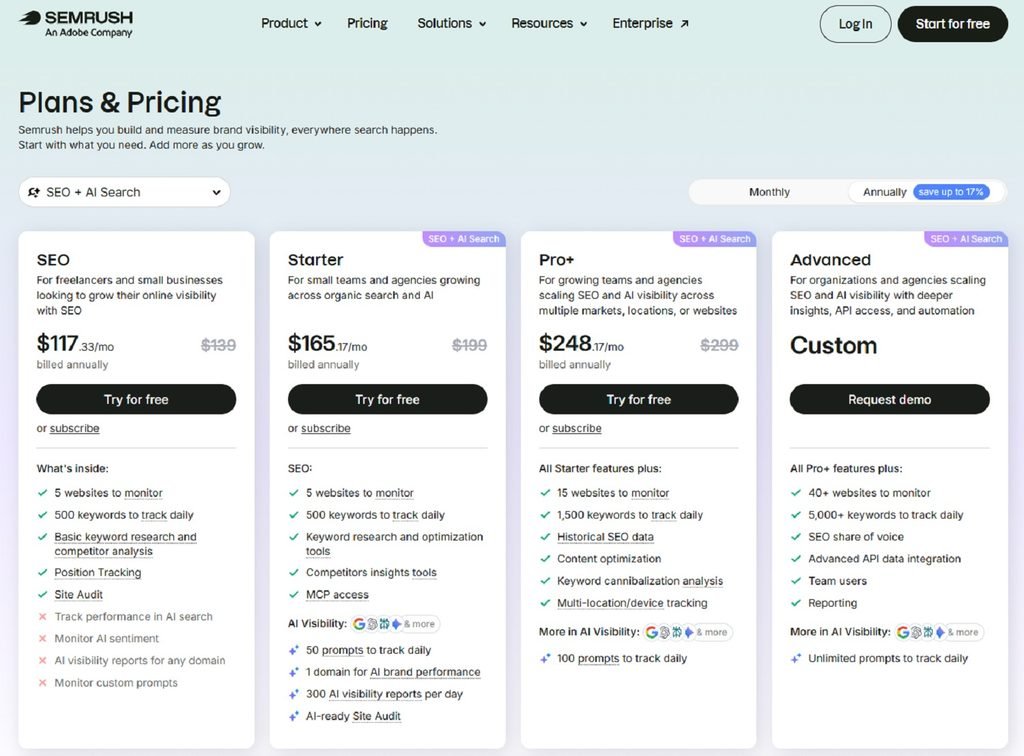
7. Price-Quality Perception – Semrush
Price-quality perception in SaaS occurs when customers see higher-priced products as having more capabilities, being more reliable, or being of higher quality.
Semrush has a pricing page that shows how its Pro and Guru plans offer different capabilities and usage allowances.
The higher-priced option has extra capabilities. This makes it easier for customers to see what they’re getting for their extra investment.
For complicated marketing processes within businesses, this can help justify the extra spend.
However, a higher price doesn’t guarantee better quality. You still need to show that the extra features will provide tangible results.
Tip: Justify higher pricing by providing tangible benefits, clear differences in features, and showing customers how they will gain value.
8. Social Proof – Ahrefs
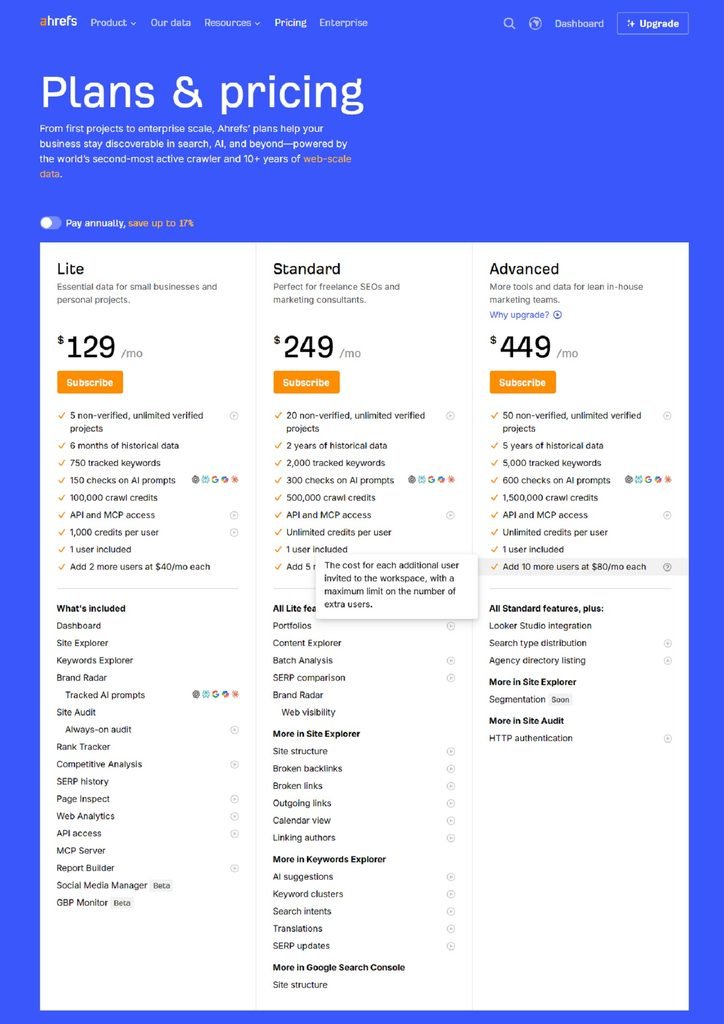
Social proof in SaaS pricing is when you provide evidence from other customers to help buyers make decisions.
Ahrefs has a dedicated customer reviews page featuring testimonials from marketers, agencies, and businesses that use its software.
The page includes customer experiences, case studies, and examples of how businesses have benefited from using Ahrefs.
This can help potential customers understand how the platform performs in real situations rather than relying only on the company’s claims.
Having relevant customer testimonials, case studies, and well-known clients can give buyers extra reassurance about your SaaS company.
Social proof can be very useful when you need multiple people to agree to a purchase.
Tip: Use genuine testimonials and show how customers have gained value from your product.
How B2B Buying Committees Respond to Pricing
When businesses are purchasing software, you’re typically working with multiple people involved in the decision-making process. These commonly include finance teams, IT departments, department leads, and end users. Each will be looking at pricing from a different angle.
Finance teams will be looking at how the software fits into their budget and whether it delivers a good ROI. IT teams will want to know if it’s secure, compatible with existing systems, and what the implementation cost will be. End users will care more about ease of use and how the software solves their problems.
According to G2’s 2026 Buyer Behavior Report, 49% of B2B software buyers reported that their CFO had reversed an already-approved purchase within the previous 12 months.
Understanding pricing psychology can help companies address these concerns and reduce the risks buyers associate with purchasing software.
Having clear pricing, transparent contract terms, and tangible benefits will make it easier for everyone involved to agree on investing in the software.
How to Apply Pricing Psychology Ethically
Using pricing psychology can help buyers understand what they’re paying for and improve your pricing strategy.
According to Wynter’s 2026 B2B SaaS Pricing Study, only 22% of surveyed SaaS leaders reported performing thorough pricing research.
You can use pricing psychology in these ways:
- Understand what buyers expect: Find out what your customers value and how they compare different pricing options.
- Be transparent with your pricing: Show buyers how much they’ll be paying, what their obligations are, what usage limits apply, and what extras there are.
- Be clear about the differences: Showcase what customers get from your different pricing options.
- Test your pricing: Use A/B tests, interviews, and conversion data to see how buyers respond to your pricing psychology strategies.
- Don’t be misleading: Avoid using false urgency, hidden charges, misleading offers, and false scarcity.
For more practical tips, take a look at our SaaS pricing page optimisation guide.
Using pricing psychology ethically can build trust, allow buyers to make informed decisions, and help your SaaS grow sustainably.
Common SaaS Pricing Psychology Mistakes
Pricing psychology can be a great way to help drive purchasing decisions, but if done wrong, it can cause confusion and damage your customers’ trust.
Here are five common mistakes made with SaaS pricing:
- Too many options: Offering too many plans without enough clarity on how they differ can confuse buyers.
- Misleading offers: Using inflated original prices and creating false urgency can damage trust.
- Not matching your customers’ expectations: Using psychological tactics that don’t match their needs or budget may not work.
- Unexpected extra charges: Hidden fees, restricted usage, or unclear billing commitments can create frustration.
- Assuming all tactics will work: Psychological pricing should be tested to see what actually works for your audience.
Overall, we want to make purchasing decisions simple.
Conclusion
Pricing helps buyers understand your offering and see why it’s worth their investment.
Understanding the psychology behind B2B SaaS pricing means knowing how psychological pricing strategies can make your prices easier to understand and help customers see more value in your product.
Strategies such as anchoring, loss aversion, and choice fatigue, along with social proof, can help explain how customers make decisions about your software.
However, these strategies may not always work for your SaaS business. A smaller startup and a large enterprise won’t necessarily have the same needs or buying processes.
Start by understanding your customers, looking at how you present your pricing, and experimenting with different strategies. Pay attention to what buyers respond to and what makes their decisions easier.
The aim is to help buyers see the value in your software so they feel confident about making a purchase.
Frequently Asked Questions
1. What is B2B SaaS pricing psychology?
Pricing psychology refers to the way your customers perceive and evaluate different pricing plans.
2. What is price anchoring?
Price anchoring is when a reference point is set so that your customers have something to compare other plans against.
3. What is decoy pricing?
By providing a less desirable option, customers can see the value of other plans. The differences between the plans should be real.
4. Does charm pricing work for B2B SaaS?
Charm pricing can affect how customers see the cost of products, especially with self-service subscriptions. But your enterprise customers will also consider ROI, features, and contract terms.
5. How can SaaS businesses use pricing psychology?
Using clear comparisons, transparent pricing, real testimonials, and customer research will help customers make an informed decision.
