
TL;DR
- SaaS lead generation focuses on attracting potential customers who are likely to convert.
- SEO, LinkedIn, interactive demos, and webinars help reach relevant audiences.
- Free tools, referrals, and partnerships create additional lead generation opportunities.
- Email nurturing and product-led strategies help turn interest into customers.
- Tracking lead quality and conversions helps improve results.
Lead generation is one thing.
However, getting people interested in your SaaS product is a whole other ballgame.
For B2B SaaS businesses, it’s about getting in front of the right decision-makers, learning what they need, and providing them with a reason to consider your product.
According to the 6sense 2026 B2B Buyer Experience Report, the vendor buyers prefer before speaking with sales wins 82% of the time. This is why increasing brand awareness and building trust early on is so important.
That’s where effective SaaS lead generation strategies come in.
There are a variety of methods you can use to target potential customers, whether it’s SEO, LinkedIn marketing, webinars, or product-led growth.
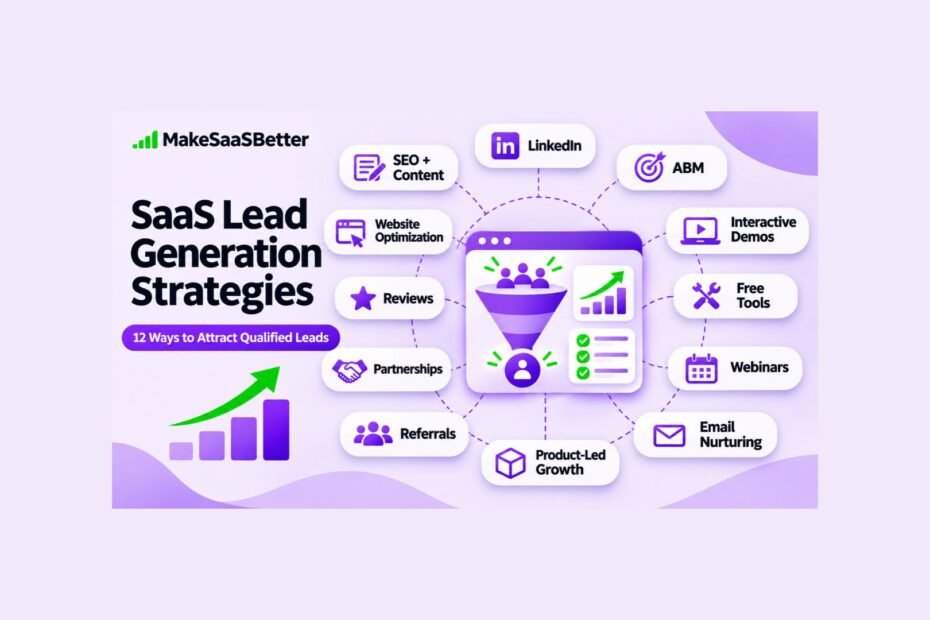
In this guide, we’re going to look at 12 effective strategies to attract qualified SaaS leads.
What Is SaaS Lead Generation?
SaaS lead generation is the process of attracting potential customers and encouraging them to show interest in your software product.
When compared to traditional businesses, many SaaS businesses operate on a subscription model. As such, when generating leads, you want to ensure they are interested in continuing to use your product.
Lead generation usually involves reaching your target audience, gaining their interest, and building a relationship to encourage them to sign up for a free trial, request a demo, or make a purchase.
The aim is to gain quality leads who not only have an interest but actually need your solution.
Why SaaS Lead Generation Is Different
Customers in B2B SaaS often take time to make purchasing decisions. This is because they will often be comparing options, looking into features, and involving various people in the decision.
The SaaS buyer journey can start a long time before someone requests a demo.
According to the 6sense 2026 Global B2B Buyer Experience Report, 96% of B2B buyers keep themselves up to date with vendors and solutions between purchases.
This means that your SaaS business needs to establish awareness and trust.
Because SaaS businesses rely on customer retention and recurring revenue, attracting the wrong leads could result in wasted acquisition costs, as well as customers canceling early.
A good lead generation strategy will target customers who are a good fit for your product, have the intent to buy, and will provide long-term value.
12 SaaS Lead Generation Strategies
Lead generation can be achieved by ensuring that you are targeting the right audiences within your chosen marketing channels and providing them with reasons to want to learn more about your product.
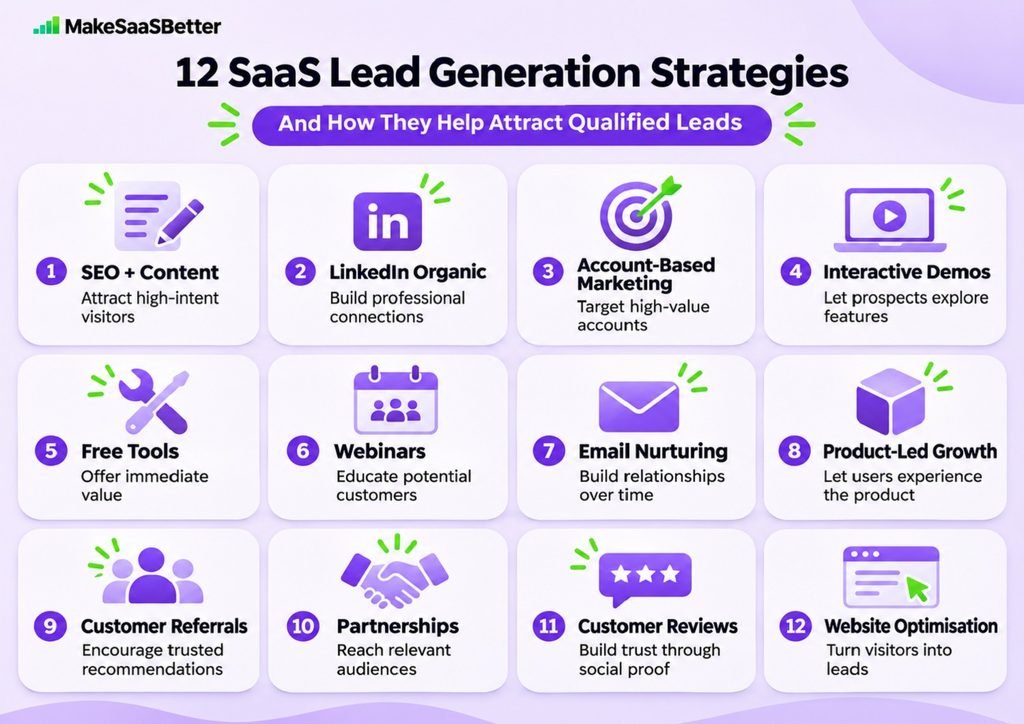
Here are 12 ways to generate leads for your SaaS business:
1. SEO + Content Marketing
A great way to generate leads for your SaaS business is by using Search Engine Optimization.
Create informative articles, guides, and comparisons for your audience to help answer any questions they may have. Focus on using keywords that show people are genuinely interested in what you are offering.
Surfer SEO provides educational content about keyword research, content strategy, and search optimization. This shows how SaaS businesses can create helpful content to target the right people.
Takeaway: Make sure your content is about your customers’ problems and their intent to buy.

2. LinkedIn Organic
LinkedIn is a great way for B2B SaaS businesses to reach professionals.
Create helpful content with valuable insights, opinions, and experiences. Ask your employees to get involved, too.
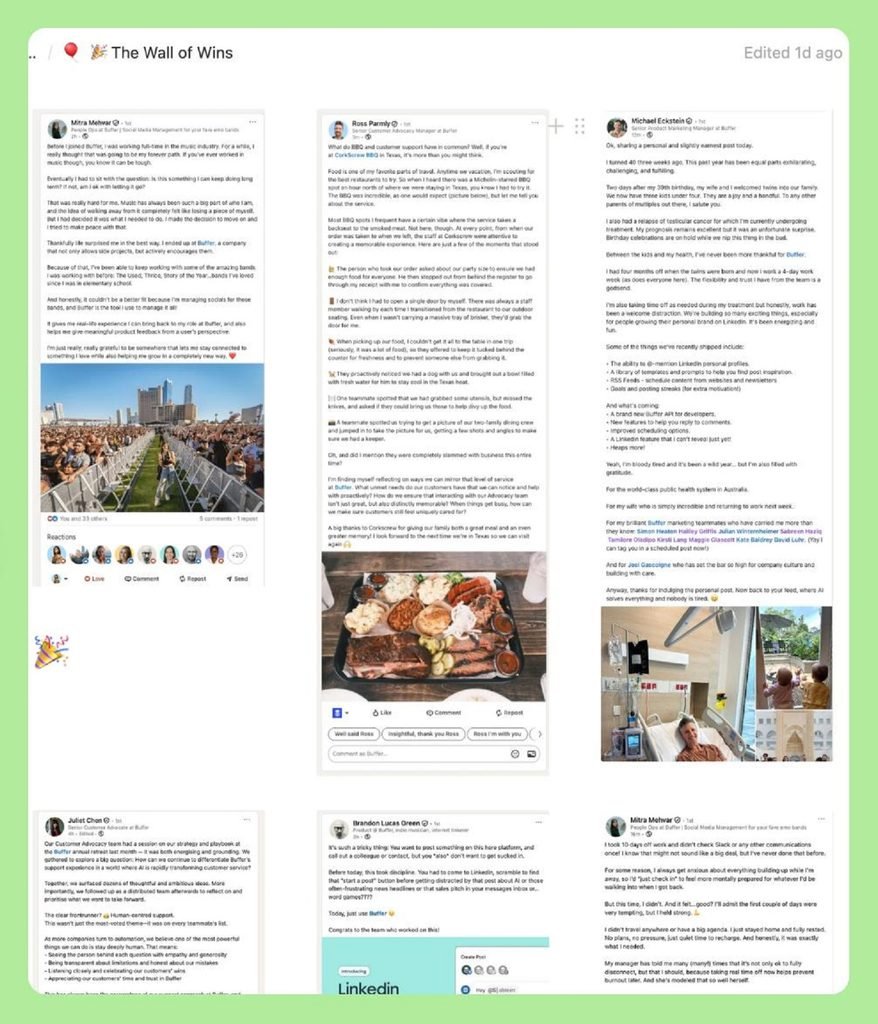
Buffer uses LinkedIn content and encourages employees to get involved to improve its presence. The company provides professional content with tips and resources that are relevant to marketers and businesses.
Takeaway: Focus on creating trust and meaningful connections.
3. Account-Based Marketing
Using account-based marketing will help ensure you are targeting companies that are most like your ideal customer.
Create personalized campaigns for those you have chosen to target based on their needs.
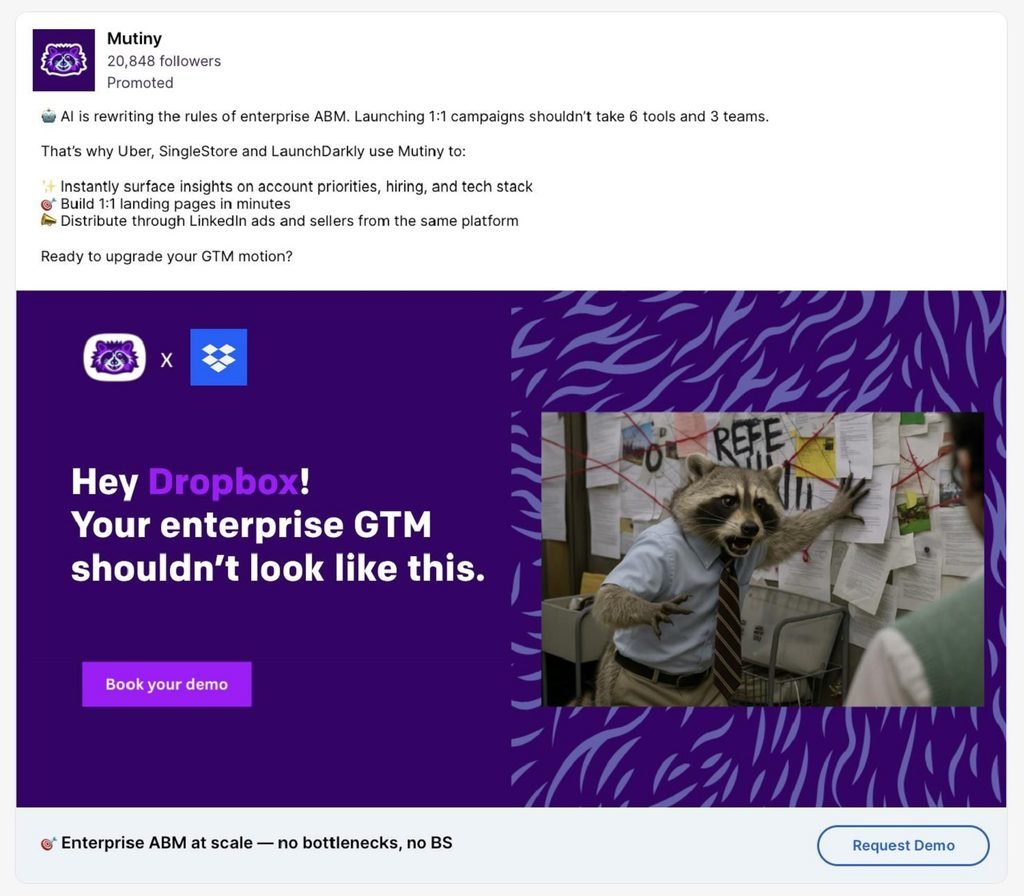
Mutiny explains how it uses personalized landing pages and LinkedIn ads for its ABM campaigns. This ensures that its messaging is based on the individual needs of each target account.
Takeaway: Target those who have a high customer fit and personalize your content.
4. Interactive Product Demos
An interactive product demo allows your potential customers to explore how your software works.
This can provide visitors with information about key features, helping them decide if your product will work for them.
Supademo explains how it uses interactive product demos on its own website and in its marketing campaigns. It also uses personalized demos when reaching out to potential customers, helping them explore the product before committing to a sales conversation.
Takeaway: You can do this by creating interactive product demonstrations to answer common questions and make it easy for potential customers to understand your product.

5. Free Tools
Providing free tools will give your potential customers instant value.
Create calculators, analyzers, templates, and assessments to attract those looking for solutions to certain problems.
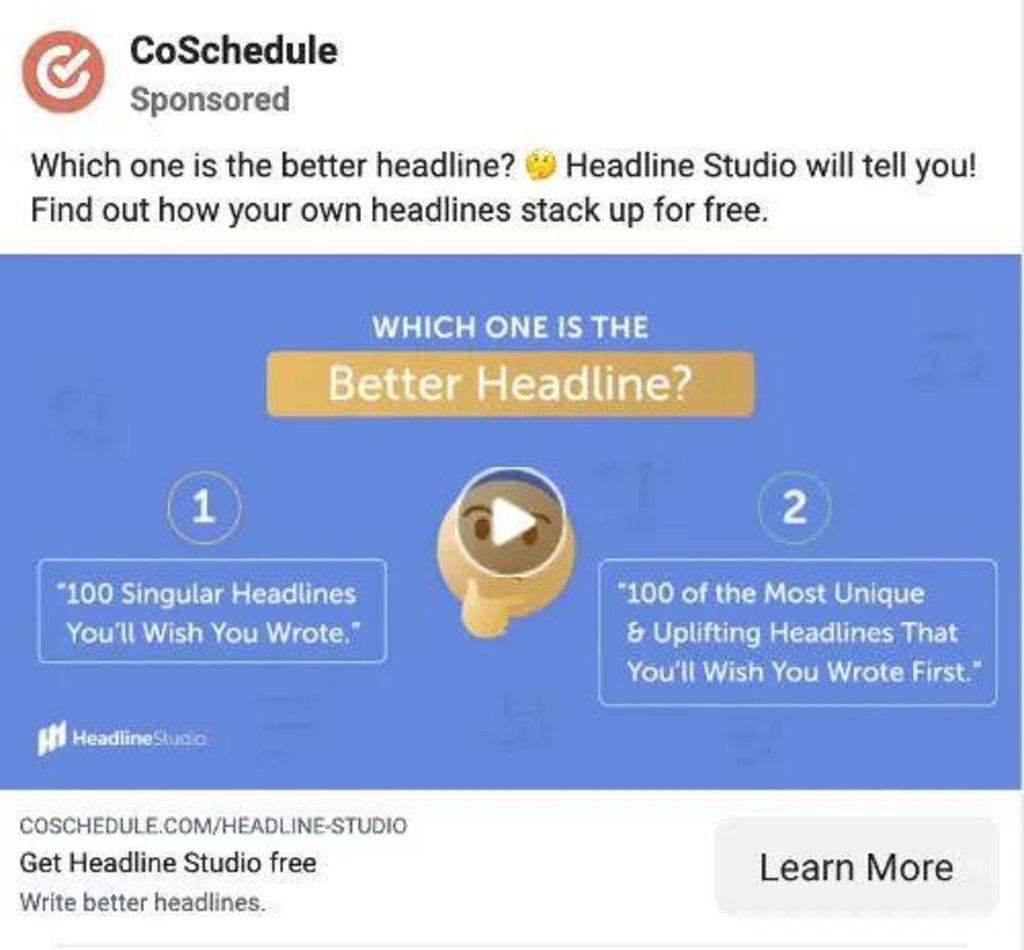
CoSchedule provides a free Ad Headline Analyzer. This allows visitors to analyze their advertising headlines. They can try out the tool and explore additional analysis through Headline Studio.
Takeaway: Create a resource related to the main purpose of your product. Provide a helpful solution to encourage engagement.
6. Webinars
Webinars are a great way to educate your potential customers and show your expertise.
Create content around your audience’s problems, invite relevant speakers, and encourage questions. Provide recordings, too.
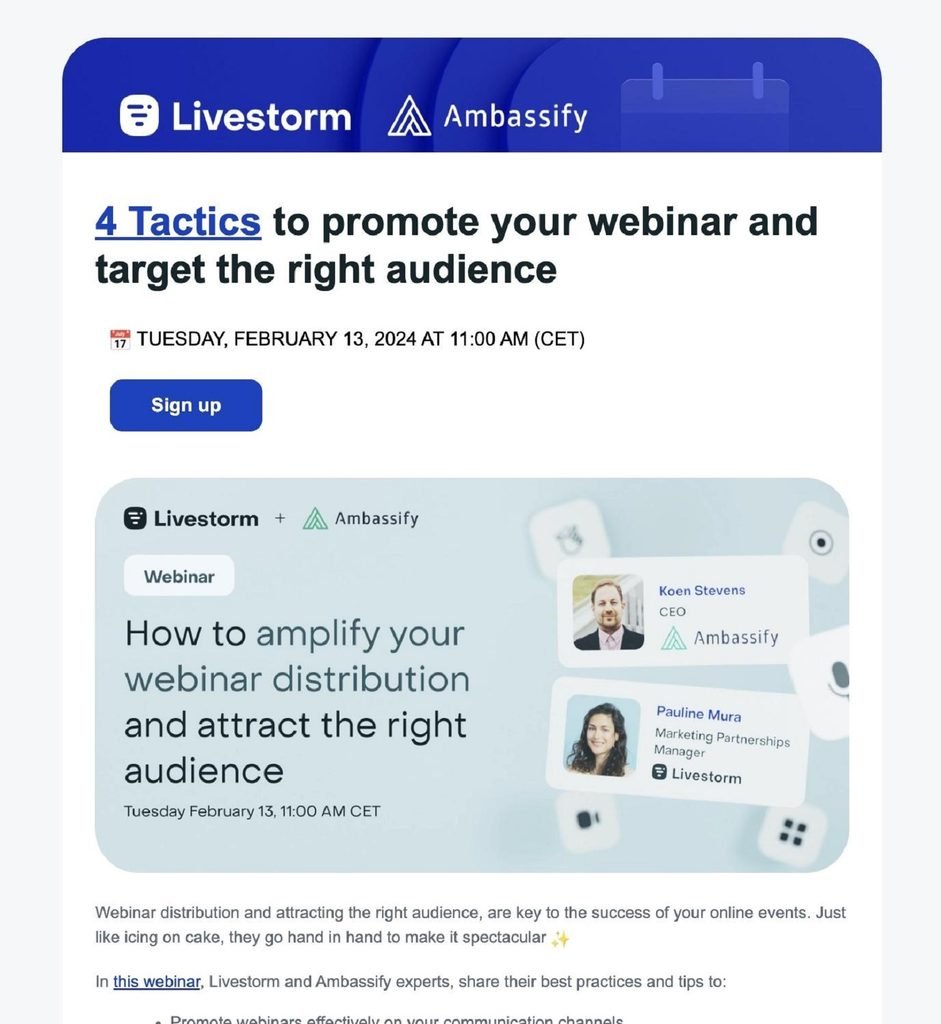
Livestorm has a range of educational webinars. It also has one explaining how its own marketing team uses webinars for lead generation.
Takeaway: Use webinar signups to identify those who are interested. You can provide them with relevant resources while continuing to educate your audience.
7. Email Nurturing
Not all of your potential customers will be ready to buy straight away.
Using email nurturing will help keep your relationships going. Provide information that is relevant to their interests and buying stage.
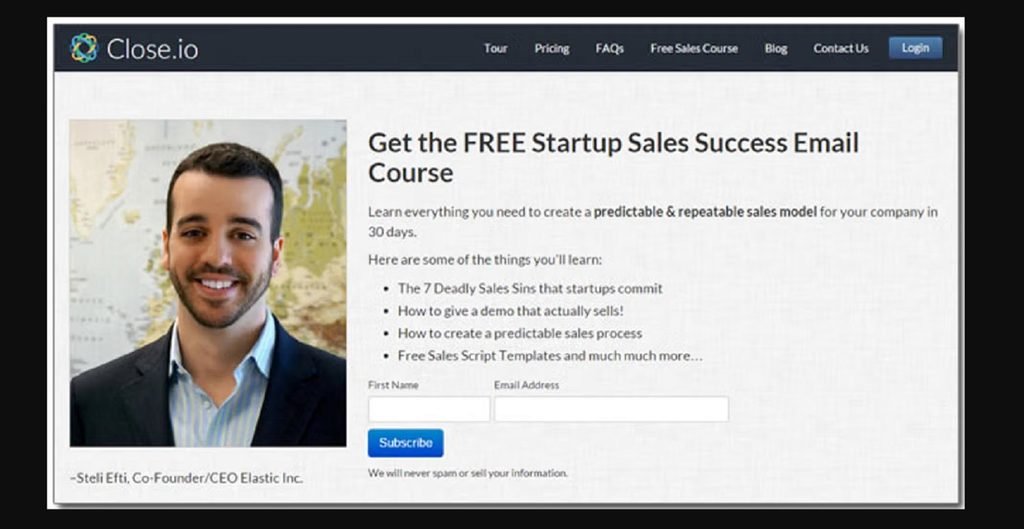
Close has documented its drip email course. This provided educational content to help teach subscribers about sales. The company explained how it used this to nurture its leads. It also helped introduce its expertise.
Takeaway: Create similar email sequences to answer questions and introduce your solution slowly. Provide helpful and relevant emails.
8. Product-Led Lead Generation
Product-led lead generation allows your potential customers to try your software.
Offer free trials and self-service onboarding to help them understand the value your product provides.
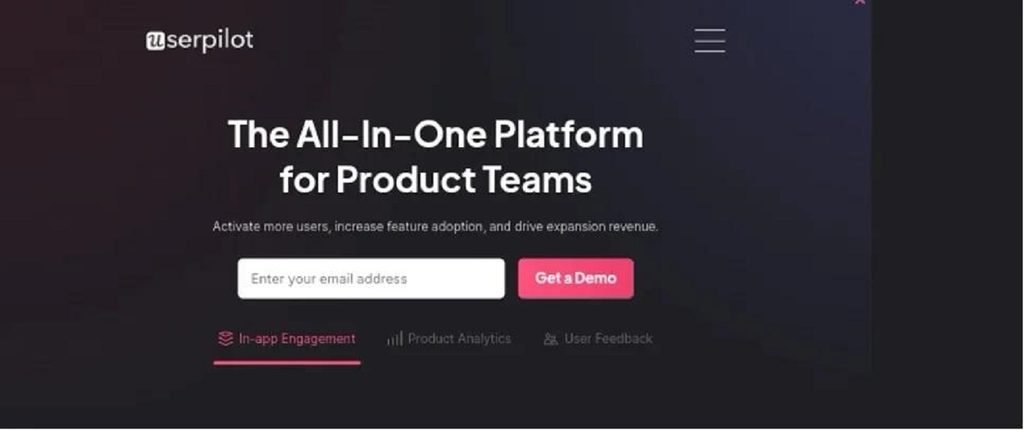
Userpilot explained how it added free trials alongside its demo option. This helped those who wanted to try the software themselves.
Takeaway: If your product can be used through self-service, help your new users understand the key benefits quickly. Remove any unnecessary barriers and help your potential customers understand the value.
9. Referrals
Referrals will help your SaaS business reach new potential customers.
Creating an organized referral program will make it easy for people to refer others. They can also be rewarded for successful referrals.
Thinkific Plus has a referral program. Participants are rewarded for referring businesses that complete sales meetings and become customers.
Takeaway: Create a similar program. You can offer account credits, extra subscription benefits, or referral rewards. Make it easy for happy customers to refer others.

10. Partnerships
Partnerships will help your SaaS business reach the right audiences. Find companies or individuals that serve similar customers.
Look into partnering with those who offer complementary software, as well as agencies, consultants, and industry experts.
PartnerStack has its own partnership program. Its partners can register leads, refer customers using their links, and be rewarded for successful referrals.
Takeaway: Start by finding businesses that have an overlapping audience. Ensure you have partnerships that will benefit both parties because of similar customer needs.

11. Customer Reviews
Potential customers will often want reassurance before they start a subscription or ask for a demo.
Providing genuine reviews, testimonials, and stories will help them understand how your product will work in practice.
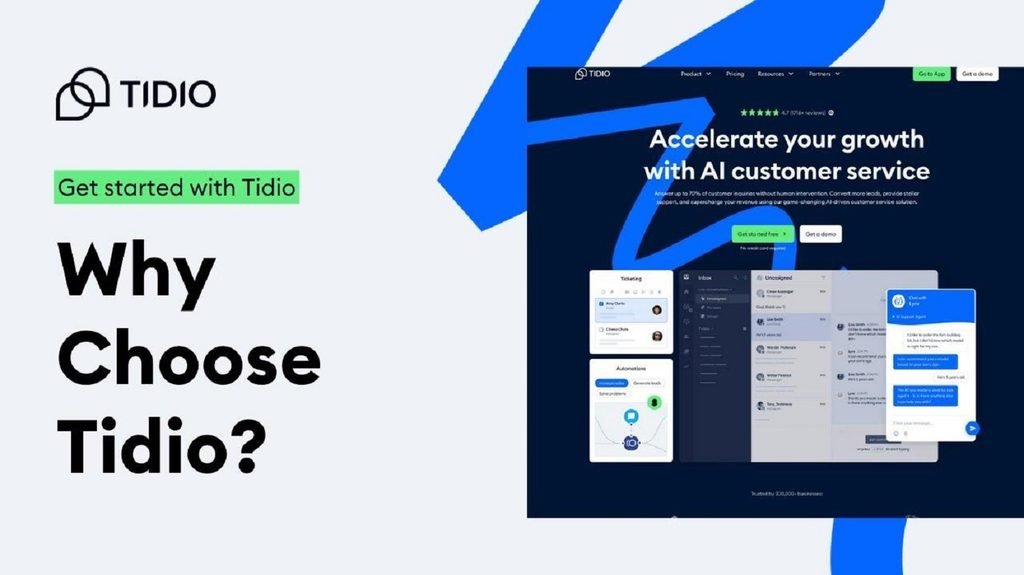
Tidio has customer reviews from sites such as G2. It also has testimonials and customer success stories on its site.
Takeaway: Do the same by gathering genuine customer feedback. Highlight relevant experiences on key pages of your site.
Let genuine experiences back up your claims and build trust.
12. Optimize Your Website
Once you have got people to your website, make it easy for them to take action.
Optimize your content, CTAs, signup forms, and landing pages. Remove any unnecessary barriers.
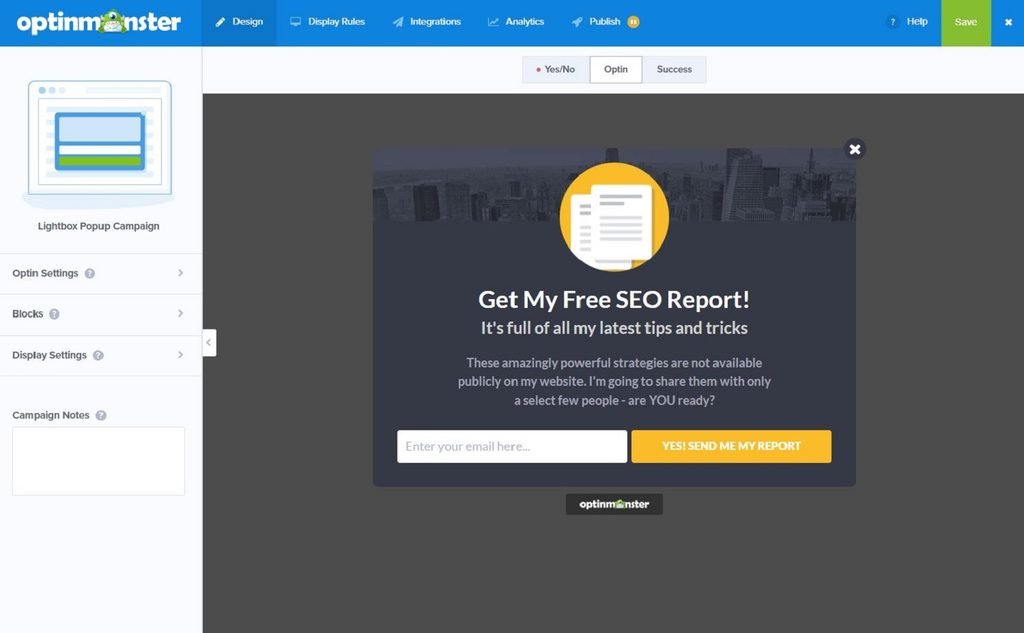
OptinMonster has documented the signup forms it uses. It has a signup form in the sidebar of its blog. This gives interested readers another chance to sign up.
Takeaway: Look at the pages that are getting the most traffic. Test changes to make it easier for your customers to convert.
Give clear and relevant actions to all of your qualified visitors.
How to Build a SaaS Lead Generation Plan
The first thing to consider when setting up a lead generation strategy for a SaaS business is knowing who you want to target and what can be done to help convert them into paying customers.
Below is a simple five-step process for lead generation.
1. Know Your Target Customer
This will help you target those who are most likely to convert. Know which industries, business sizes, roles, and pain points are the best fit for your software.
2. Know Where to Promote
Promote your SaaS through channels where your target audience is active. This could include SEO, LinkedIn, webinars, or paid advertising.
3. Offer Something Relevant
Offer your target audience something to engage with. This can include a free trial, product demo, useful template, and much more.
Ensure your offer matches your B2B SaaS pricing model so your target audience knows how to get started.
4. Create a Lead Nurturing Strategy
Create relevant emails and content to educate and move your interested target audience down the sales funnel.
5. Analyze and Improve
Ensure you track the quality of your leads and conversion rates. Regularly analyze your results and spend money on the channels that are providing you with quality customers.
How to Measure SaaS Lead Generation Success
More leads don’t always mean more growth. You’ll want to know how you’re attracting quality leads that can convert into paying customers for your SaaS business.
According to HubSpot’s 2026 State of Marketing research, 39% of marketers focus on lead quality and marketing-qualified leads, while 34% monitor their lead-to-customer conversion rate.
There are five key KPIs to monitor when tracking SaaS lead generation:
- Lead Quality: How well your leads fit your ideal customer profile.
- Cost Per Lead (CPL): Your total lead generation spending divided by the number of leads generated.
- Lead-to-Customer Conversion Rate: The percentage of leads that have converted into actual paying customers.
- Customer Acquisition Cost (CAC): Your total sales and marketing acquisition costs divided by the number of new customers acquired.
- Marketing-Generated Pipeline: The potential revenue from sales opportunities generated through marketing.
By regularly checking these, you’ll be able to see which channels are providing quality leads and where to invest more.
Common SaaS Lead Generation Mistakes
Even the best lead generation tactics for SaaS can miss the mark if they are targeting the wrong audience.
Avoid these five mistakes:
1. Quantity Over Quality: Generating more leads doesn’t mean that you will get more sales. Focus on generating high-quality leads.
2. Ineffective Targeting: Spending time trying to target people who don’t need your product is a waste of time and money.
3. No Lead Nurturing: Not all leads will be ready to purchase. Providing relevant content can keep them interested.
4. Poor Website Experience: If your website is confusing or has difficult-to-understand forms, it will discourage visitors from converting. Optimizing your SaaS pricing page can help reduce this problem.
5. Not Measuring Outcomes: Without knowing how many people are converting and what it costs to acquire them, you won’t know which tactics are working.
Conclusion
Getting leads for your SaaS business is all about attracting the right audience to your site and giving them a reason to consider your product.
There are plenty of tactics to drive leads to your SaaS business, including:
SEO, LinkedIn, webinars, referrals, and product-led growth.
Start with the tactics that are most aligned with your target audience, budget, and business objectives. You don’t need to use all 12 strategies at once. Focus on the ones that make the most sense for your business.
Ensure that your tactics provide value to your audience, build relationships, and encourage prospects to move further down the sales funnel.
Most importantly, ensure that you are tracking what is working. Getting quality leads who become paying customers is much better than just increasing the number of leads.
Which tactic will you start with?
Frequently Asked Questions
1. What is SaaS lead generation?
It is when you attract new potential customers and encourage them to explore your software through things like free trials, demos, or inquiries.
2. What are the best ways to generate SaaS leads?
Lead generation can be done effectively through methods such as SEO, LinkedIn, webinars, email nurturing, free tools, referrals, and product-led growth. This will depend on your audience and goals.
3. How can a B2B SaaS company generate quality leads?
A B2B SaaS company can generate quality leads by targeting its ideal customer base. It can create relevant content, offer product demonstrations, and nurture interested prospects.
4. What are the best channels to generate SaaS leads?
This can be done effectively using SEO, LinkedIn, webinars, interactive demos, and partnerships. It will depend on where your target audience looks for solutions.
5. How do I measure my SaaS lead generation?
Look at the quality of your leads, cost per lead, conversion rate, and cost per customer acquired. See how much pipeline you are generating from marketing.
